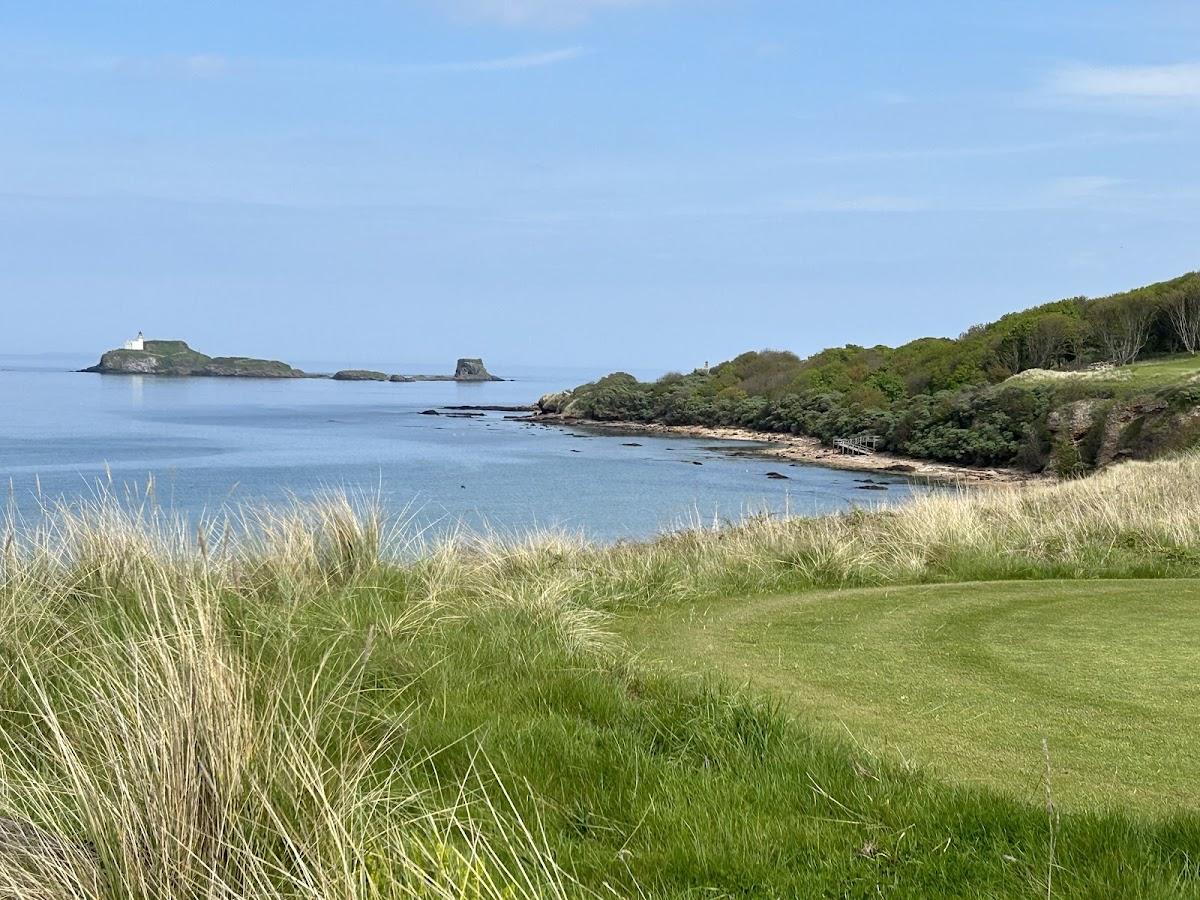
Archerfield Fidra Course Guide
Archerfield Fidra Course Guide covering course character, visitor booking, value, route planning, nearby golf, practical advice, and an honest verdict.

Your saved itinerary stays on this device while we prepare the next view.
100% FreeWhat links golf actually is, why Scotland invented it, how to play it well, and where to experience it — from a golfer who plays it every week.
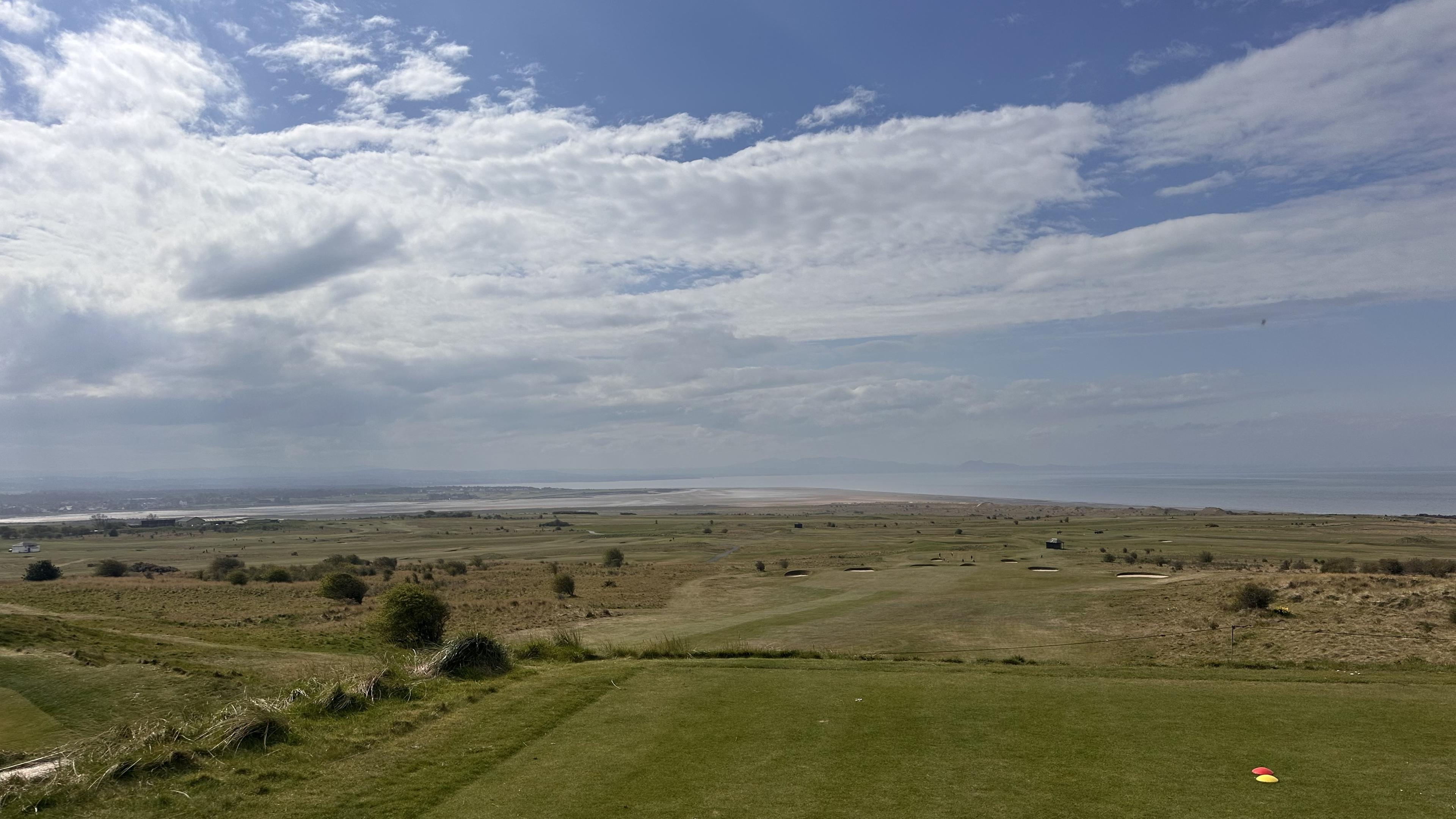
For the plain-English definition first, start with what is links golf, then come back here for the Scotland-specific trip-planning view.
Links golf is golf played on the sandy, treeless coastal ground that sits between the sea and the first fertile farmland inland — the "link" of land that gave the style its name. The ground is firm, the fairways run fast and often unpredictably, the wind is a constant factor rather than an occasional one, and the bunkers are typically deep, steep-faced, and placed to punish rather than merely to frame a hole. It's the original form of golf. Every other style — parkland, desert, resort — is a variation invented after the fact. Links came first, on this exact stretch of coastline, because this is where the game was actually played by the people who invented it.
Scotland has more links courses than any other country, and a meaningful number of the world's most respected ones — St Andrews, Muirfield, Carnoustie, Royal Dornoch, North Berwick, Prestwick — all sit on this original ground. Golfers who have only ever played parkland courses often arrive in Scotland expecting a scenic version of what they already know. It isn't. It's a different game played with the same clubs.
Links golf changes the fundamentals of how you should think about a round. On a parkland course, the ball generally does what you hit it to do — a well-struck shot lands and stops close to where it landed, because the turf is soft and irrigated. On a links course, the ball keeps moving after it lands, sometimes for a long way, in a direction the wind and the ground's contours decide rather than you. A shot that looks perfect in the air can end up in a pot bunker you didn't even see from the fairway. That unpredictability is not a flaw in the design — it's the entire point. Links golf rewards golfers who plan for what the ball will do after it lands, not just where they intend to send it.
This is also why so many golfers travel specifically to play it. You can build a beautiful parkland course almost anywhere in the world with enough budget and water. You cannot manufacture 400 years of wind-sculpted dunes, and you cannot recreate turf that's been mown short over sandy soil since before anyone thought to write down the rules. Scotland's links courses aren't just old — they're irreplaceable in a way a new build never can be.
I play out of Lundin Golf Club in Fife and Nairn Golf Club in the Highlands, and the same hole plays differently round to round depending entirely on which way the wind is blowing that day — not a subtle difference, a genuinely different club and shot shape from one visit to the next. That's not a quirk you notice occasionally on links golf. It's the defining feature of every single round.
The short version: parkland golf is generally played through the air, on soft ground, with trees defining the strategy. Links golf is played along the ground as much as through the air, on firm ground, with wind and dunes defining the strategy. A golfer who scores well on a well-irrigated American parkland course by flying the ball high and stopping it near the pin will often find that same shot runs 20 feet past the flag on a fast, firm links green — and that a shot they'd never consider at home, a low, punched runner into the front of the green, is the correct play here. Neither style is harder in an absolute sense. They reward different skills, and the gap between them is bigger than most first-time visitors expect.
Not all Scottish links play the same way, and lumping them together as one experience undersells what makes each region distinct.
Championship links — St Andrews Old Course, Muirfield, Carnoustie, Royal Dornoch, Turnberry. These are the courses that host Open Championships and define the sport's history. They tend to be the most exposed to wind, the most strategically demanding, and the most expensive to play.
Classic understated links — North Berwick, Prestwick, Elie, Lundin Golf Club. Less globally famous, often significantly cheaper, and in some cases more purely fun to play precisely because they haven't been lengthened or modernised to defend against elite scoring. Lundin Golf Club, where I'm a member, is exactly this kind of course — a proper Scottish links in the town of Lundin Links, Fife, that most visiting golfers have never heard of and should.
Highland links — Royal Dornoch, Brora, Golspie, Nairn. Further from the central belt, generally quieter, and often considered the most authentic remaining links experience because tourism pressure has changed them the least.
Modern championship links — Kingsbarns, Castle Stuart, Trump Turnberry (post-renovation). Built or substantially reshaped in the last three decades, using the same design principles as the originals but with contemporary routing, drainage, and visitor infrastructure.
Play the bump-and-run, not the high approach. On firm, fast links turf, a low, running approach shot that uses the contours of the ground is usually more reliable than a high, soft-landing shot — even for golfers who are used to flying the ball all the way to the pin on parkland courses. Trust the ground.
Respect the wind more than the yardage. A links wind can turn a 150-yard shot into a genuine 3-club decision. Club selection based on the number on the card, ignoring what the wind is doing, is the single most common mistake visiting golfers make.
Miss in the right spot, not just short of trouble. Links greens are frequently protected on one side by a bunker or a run-off, and open on the other. Knowing which side to miss on, rather than just trying to hit the green, is what separates a good score from a demoralising one — a local caddie is worth every penny here.
Expect the ball to run out on the fairway too. Firm fairways mean drives roll further than the same swing would produce on wet parkland turf — sometimes 30 or 40 extra yards. Don't be alarmed when a links course "plays short"; that's the ground doing exactly what it's supposed to.
Don't be afraid to putt from off the green. On firm links turf, a putter from 20 or 30 yards off the putting surface is very often a better play than a chip or pitch, especially into the wind. It looks unusual to golfers who've never done it, and it's frequently the smartest shot in the bag.
Judging a links course by how it looks from the tee. Many of Scotland's best holes look unremarkable from the tee box and only reveal their strategy once you're standing over the second shot. Don't write off a hole — or a whole course — before you've played it.
Skipping a caddie to save money. On a links course with blind shots and deceptive contours, a caddie isn't a luxury add-on the way it might be elsewhere — it's frequently the difference between an enjoyable, informed round and 18 holes of guesswork.
Packing for the forecast instead of for links weather. Scottish coastal weather changes faster than any forecast update. Layers, a proper waterproof, and a warm hat in your bag even in July are not optional extras on a links course.
Treating every links course as interchangeable. As above — a Highland links like Royal Dornoch, a championship test like Muirfield, and an understated gem like North Berwick are genuinely different experiences. Building a trip around "links golf" without understanding which flavour you actually want is how golfers end up disappointed by a course that was never wrong for them, just wrong for what they expected.
Caledonia Golf's interactive course map covers 97 hand-picked Scottish courses, and the map lenses include a "Hidden links" filter that surfaces exactly this kind of course — the understated, historically significant links that don't always make the generic top-10 lists. If you already know you want the full championship experience, our best golf courses in Scotland guide ranks the Championship-tier links by NCG data. If you're still deciding what kind of trip you want, the Scotland golf trips planning guide is the place to start.
What are the best links courses to play in Scotland? St Andrews Old Course, Muirfield, Carnoustie, and Royal Dornoch are the four most-cited Championship links, but North Berwick and Kingsbarns are widely rated as being in the same class at a lower green fee. Our best golf courses in Scotland guide breaks these down by tier with green fees and booking difficulty.
What is the links golf course in Scotland? There isn't a single "the" links course — Scotland has dozens, spread across East Lothian, Fife, the Highlands, Ayrshire, and beyond. St Andrews Old Course is the most historically significant, since golf has been played on that exact ground since at least the early 1400s, but it's one of many rather than the only one.
What is a Scottish links golf course? A links course is one built on the sandy coastal ground between the sea and inland farmland, characterised by firm, fast turf, minimal trees, prominent dunes, and significant exposure to wind. The word "links" comes from the Scots term for this specific type of land, not from golf itself.
How do you play Scottish links golf? Play the ball along the ground more than through the air, respect the wind as much as the yardage, expect extra roll on both drives and approach shots, and consider a caddie for courses with blind shots or deceptive greens. Dress for changeable coastal weather regardless of the season.
Ready to build a trip around Scotland's best links courses? Start planning on Caledonia Golf →
Archerfield Fidra Course Guide covering course character, visitor booking, value, route planning, nearby golf, practical advice, and an honest verdict.
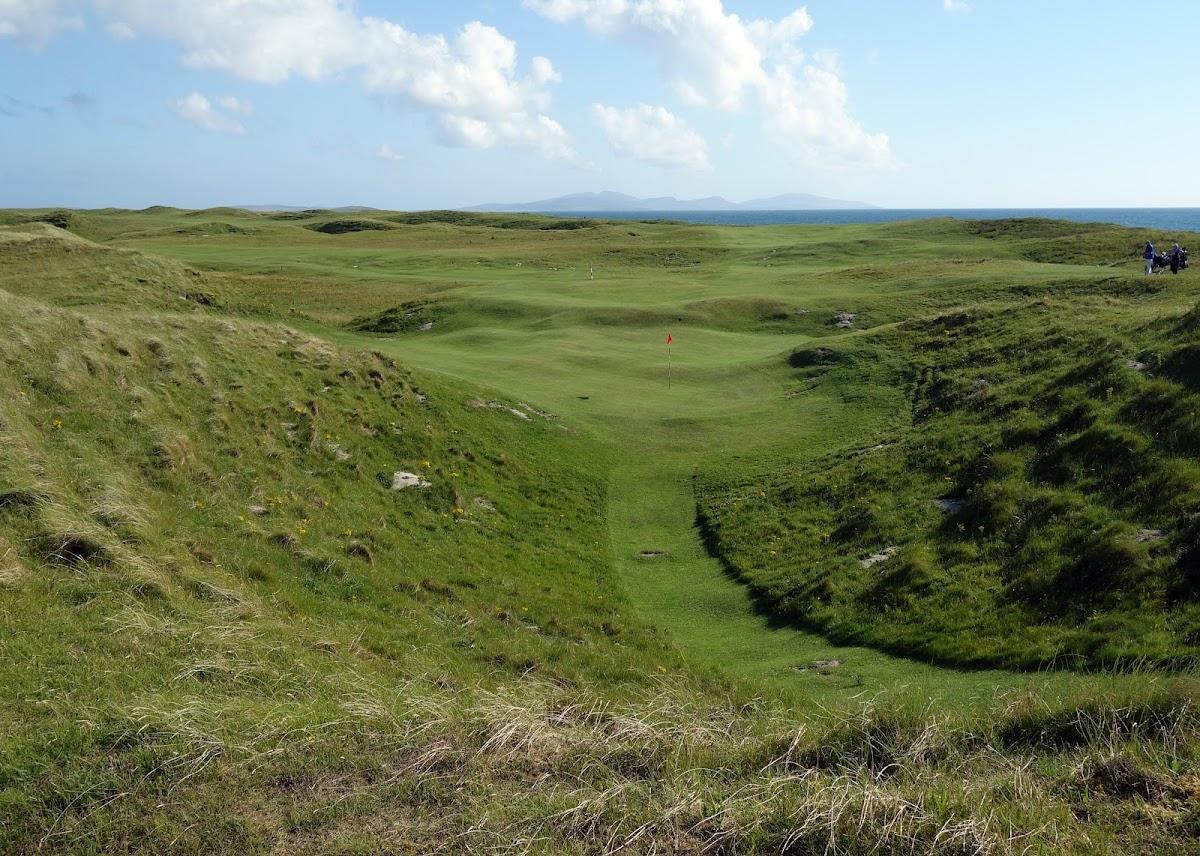
Askernish Golf Guide for South Uist covering course character, visitor booking, value, route planning, nearby golf, practical advice, and an honest verdict.
The best time to play golf in Scotland by month, with daylight, weather, green-fee, availability, turf, regional and booking trade-offs.